
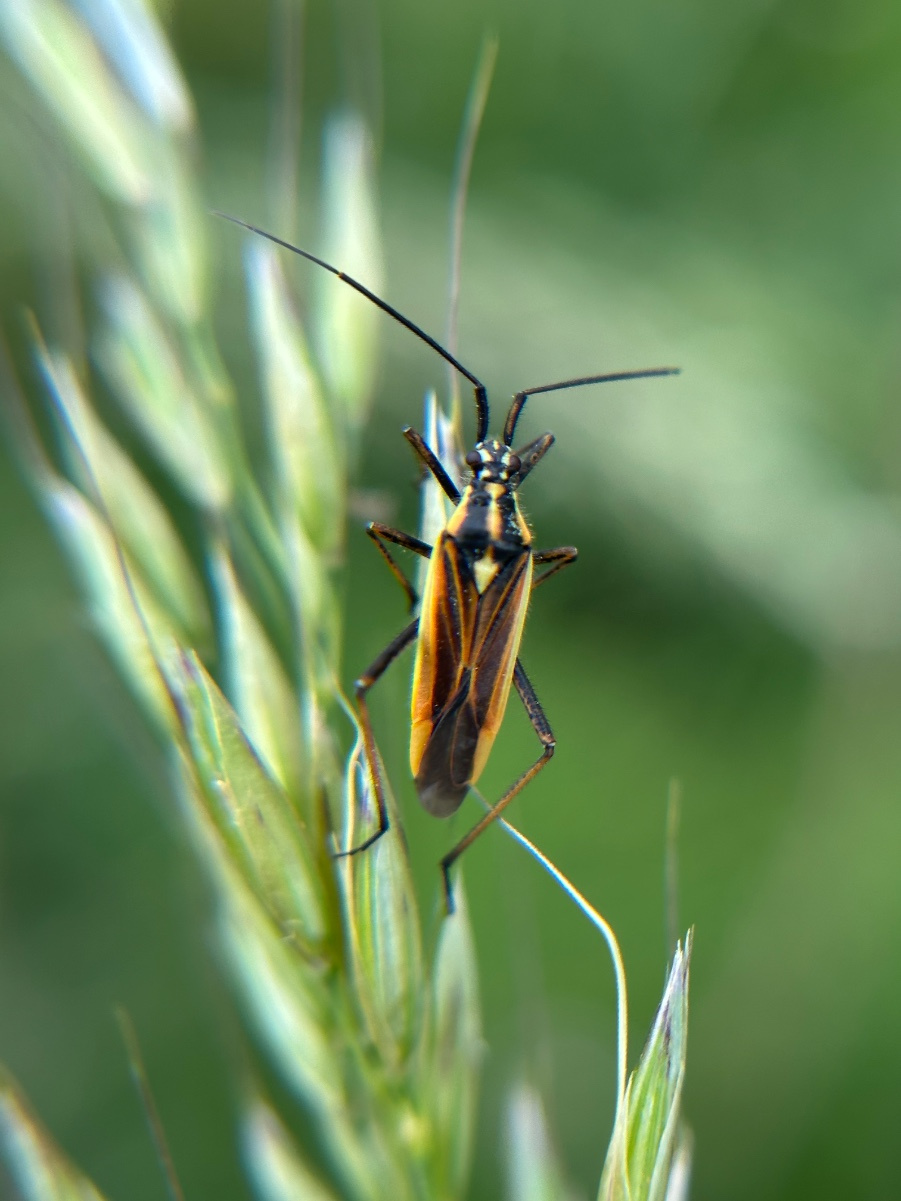
Spring is on the horizon, and the familiar stirring of life is beginning to creep back after months of cold, rain and grey skies. But the warmer months feel slightly different from 20 years ago – and I don’t mean fewer children on their bikes outside, or hotter weather. I’m talking about bugs.
Our six – or eight – legged friends are on the decline, and despite the perceived perk of having fewer of the critters splattered on our car windscreens or lurking in the corners of our homes, there’s a far more serious reason why we should be worried about their absence.
This is a warning sign – one that farmers, landowners and policymakers can no longer afford to ignore.
In the farming industry, the 97% statistic is one that has followed us around for decades. Since the 1930s, agricultural intensification and development have meant that just 3% of our wildflower meadows remain. But this is not simply a nostalgic loss of colour in the countryside. The disappearance of those meadows represents a collapse in habitat – and when habitat disappears, insects disappear with it.
As farmers, that collapse should concern us deeply. We are already navigating volatile commodity prices, shifting government policy, post-Brexit trade pressures and mounting cost increases. But alongside all of that, we are fighting another battle – one against pests. Or more accurately, against the wrong kind of bugs.
Because not all insects are pests, and not all bugs are bad. In fact, we need more of them – pollinators such as bees and hoverflies; predators such as ladybirds, lacewings and beetles that feed on aphids and other crop-damaging insects; spiders that quietly do their work in hedgerows and field margins. These are the insects that help restore balance in our fields.
When beneficial insect numbers fall, pest outbreaks become more severe. The natural checks and balances weaken. And reliance on chemical intervention grows.
If we want fewer bad bugs, we need more good ones. And to achieve that, the answer lies in restoring meadows.
Meadows are working tools, not just pretty extras. I look at them as a wildlife haven and an insect bank nucleus, which allows insects to thrive.
What I mean by that is simple – they give insects somewhere safe to build back up. A meadow is cut once a year and otherwise left largely undisturbed. With around 30 different wildflower species providing pollen and nectar, it becomes a stable food source throughout the season. That stability allows insect populations to recover, reproduce and increase in number.
From there, they don’t stay in the meadow. We’ve put in wildflower strips and 12 metre habitat corridors running through fields so insects can move out into the wider landscape. Hedges are managed so they can overwinter safely, meaning those populations return year after year.
The meadow isn’t the end point – it’s the starting point. It rebuilds the density of beneficial insects so they can move into crops, pollinate plants and help control pest species naturally.
One of the biggest misconceptions I’ve found is that many farmers believe that more meadows means less food production. Although I empathise with their concerns, especially at a time when the idea of taking land out of direct production can feel risky, the reality is often different.
In my experience, most meadow areas go onto field edges or less productive patches of land. On many farms, particularly those that were reshaped decades ago, there are small or awkward fields that are inefficient to work with modern machinery. When you’re running large kit across a three or four hectare field, the economics rarely stack up. The yield is often lower, the inputs are the same, and the return isn’t what you would hope.
As farmers, this is making us think more strategically. The best land, of course, remains in food production. That has never changed. However, what changes now is how we treat the margins and the weaker performing sections. By placing meadows there, we aren’t sacrificing strong output – we are improving the system overall.
We are talking about real long-term stability – healthier ecosystems that support healthier crops. Good bugs return and reduce pest pressure. Better-managed margins improve biodiversity, and less soil disturbance improves structure and water infiltration. Over time, that strengthens resilience and helps protect yields.
We worked with Wildflower Co. to get it right from the start. For me, the priority was diversity. There’s no point putting something in that only looks good for a year. We needed long-term stability.
We started by introducing a mix containing around 30 different wildflower species. Some areas were established using combined meadow mixes, reintroducing species that had disappeared locally.
What that has given us is diversity. More plant diversity means more nectar sources across the season. More nectar means more insects. And more insects means the right kind of natural balance returning to the landscape.
In the areas where we’ve put this in place, we haven’t used insecticide for around six years. That wasn’t the original headline goal – but it’s a reflection of what happens when ecosystems start to function properly again.
We are currently at such a low point for insects in the landscape and wildlife recovery. If wildlife does not begin to recover, change will eventually be imposed. And in my experience, proactive land management works far better than reactive regulation. We are far better to start now, shape solutions that suit our land, and begin to see the benefits, rather than wait to be forced into action later.
As I’ve seen on our own farm, you need these places as little havens in your landscape for insects to thrive. They do not have to dominate productive land. They do not have to compromise output. But they do need to exist.
Every farm can do a bit. And if we all do something, we begin to rebuild what has been lost.
Enter your details to access this file